










Wer kennt sie nicht? Die jährlich stattfindenden Mitarbeitergespräche mit dem Vorgesetzten. Auch die Netstream handhabte die Leistungsbeurteilung bis vor kurzem auf diese Weise. Aber was, wenn eine Firma nicht mehr hierarchisch, sondern kollegial geführt wird? Schaffen wir die Gespräche ganz ab? Lesen sie hier wie die Netstream dafür sorgt, dass Mitarbeitende auch ohne Chef von der Ausseneinschätzung ihrer Leistung profitieren.
Auf dem Weg in eine agil-lernende Organisation muss auch die Feedbackkultur überdacht werden und ein Wandel stattfinden. Deshalb haben wir bereits zu Beginn des Jahres das Prinzip “Peer Feedback” in der Netstream eingeführt.
Was ist «Peer-Feedback»?
Kurz gesagt sind es Feedback-Gespräche von selbst ausgesuchten Mitarbeitenden. Und das funktioniert so: Die zu beurteilende Person wählt 3-6 Mitarbeitende aus und diese werden, sofern sie der Anfrage zustimmen, der Person während 10 Minuten Feedbacks zu folgenden 4 Punkten geben:
- KEEP: Was machst du gut?
- IDEA: Wo ist Entwicklungspotenzial? (konkrete Vorschläge)
- HIGHLIGHTS als Mensch: Was macht dich toll & einzigartig?
- HIGHLIGHTS im Job: Was hast du toll & einzigartig gemacht?
Die Feedbacks selbst finden in einem 1:1 Setting statt und werden von einem Moderator begleitet. Dabei soll kein Bashing, sondern ein ehrliches und wertschätzendes Feedback sowie konstruktive Änderungsvorschläge herauskommen.
Voller Spannung und Vorfreude veröffentlichten meine Arbeitskollegin Leandra und ich den Intranet-Post mit allen wichtigen Informationen zu den Peer-Feedbacks. Ich staunte nicht schlecht, als ich keine 5 Minuten später bereits die erste Einladung als Feedbackgeber erhielt, und zwar von unserem CEO Alexis Caceda. Das wird die erste «Quali» in seinem Leben, erwähnte er nebenbei.
Meine erste Runde
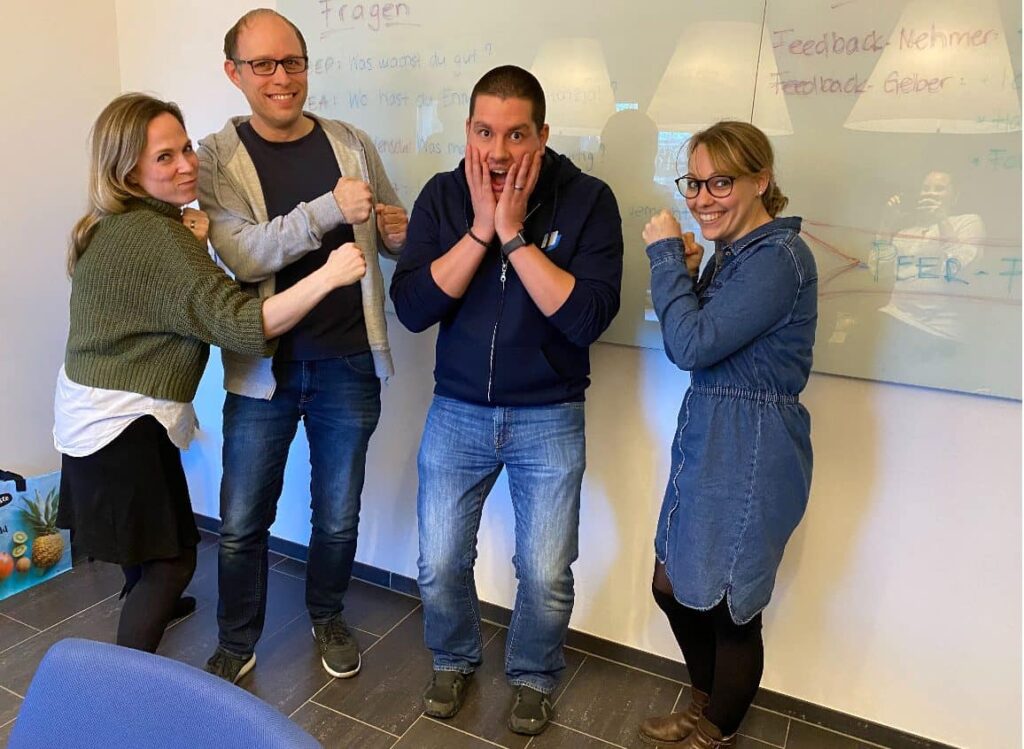
Am Tag X fanden sich der CEO Alexis, die Moderatorin Leandra, die weiteren Feedbackgeber und ich im Sitzungszimmer ein. Leandra notierte nochmals die 4 Feedback-Punkte sowie einige Regeln (Ich-Botschaften…) aufs Whiteboard und erklärte uns diese kurz. Dann ging es auch schon los. Ein Feedbackgeber blieb mit dem Feedbacknehmer und der Moderatorin im Sitzungszimmer. Während die anderen Feedbackgeber und ich draussen in unserer Lounge einen Tee tranken und auf unseren Einsatz warteten.
Als Letzte in der Reihe durfte nun ich Alexis mein Feedback zu seiner Arbeit als CEO geben. Sein Feedback habe ich sorgfältig vorbereitet und sehr detailliert niedergeschrieben. Alexis und ich sassen uns gegenüber und die Moderatorin nahm hinter mir Platz. Ich sprach, er notierte, die Moderatorin schwieg. Einen solchen Monolog zu führen war für mich ungewöhnlich, aber nicht unangenehm. Alexis hörte meinen ehrlichen Worten aufmerksam zu, ohne etwas zu sagen. Das bestimmten die Regeln. Während es etwas Überwindung kostete, dem CEO sein Entwicklungspotential aufzuzeigen und konkrete Vorschläge zu unterbreiten, war es umso leichter, ihm zu erzählen, was ich grossartig an ihm finde. Alexis schien selbst erstaunt darüber zu sein und ich fragte mich, ob ihn vielleicht noch gar nie jemand auf diese Weise gelobt hatte. Die 10 Minuten gingen wie im Flug vorbei und je länger dieses Gespräch (ist es ein Gespräch, wenn nur ich rede?) andauerte, desto wohler fühlten wir uns beide damit.
Bei der gemeinsamen Abschlussrunde meinte Alexis, dass ihm unser Feedback, vor allem das kritische, viel für die Zukunft bringen würde und er bedankte sich aufrichtig und herzlich bei uns.
Auf der anderen Seite des Feedbacks
Einige Wochen später sass ich auf der anderen Seite und hatte mein eigenes Peer-Feedbackgespräch. Obwohl ich mich als sehr selbstreflektierter Mensch bezeichnen würde, haben mich die da erhaltenen Feedbacks überrascht. Speziell die IDEA (Entwicklungspotential), deckten sich nicht vollumfänglich mit den Vorstellungen, die ich selbst über mein Verbesserungspotential hatte. Mich durch die Augen nicht nur eines Kollegen, sondern mehrerer zu sehen, schärfte mein Verständnis für mich selbst auf eine ungeahnte Weise.
Mein Fazit
Der Nutzen eines Peer-Feedbackgesprächs ist weitaus grösser, als bei einem vom Vorgesetzten geführten Beurteilungsgespräch. Die Akzeptanz eines Feedbacks, welches man von selbst gewählten Kollegen erhält, ist nicht nur grösser, sondern auch glaubwürdiger. Speziell, wenn die Feedbacks weitgehend übereinstimmen. Dass das Feedback nicht dokumentiert wird und weder Ziele enthält noch an Lohnerhöhung oder Beförderung geknüpft ist, erleichtert zusätzlich das Gehörte anzunehmen und erhöht die intrinsische Motivation, die erhaltenen IDEAs umzusetzen.