Hardly any company can do without databases these days. A disaster or logical error that affects database availability can lead to data loss, significantly impair employee productivity and even damage a company’s brand and revenue. Reduce the risks with highly available databases.
In IT, databases are electronic management systems that hold information in the form of data. Databases work via a so-called database management system (DBMS). SQL databases such as Microsoft SQL, MySQL or PostgreSQL are commonly used. Today, database systems are a core component of business software and are therefore among a company’s vital IT technologies. Disruptions or even outages quickly cause high costs through lost revenue, loss of customer trust and the additional effort required to repair the damage.
Highly available database
The only way to reduce the risk of database outages is to achieve high availability. The problem, however, is the so-called single point of failure: a failure of a resource that is not designed redundantly and whose outage brings the entire system to a standstill. Highly available databases must therefore use redundant instances to prevent, for example, defective storage media (HDD or SSD) from blocking the entire application. The most common method of achieving high availability for databases is therefore to store the same data multiple times. This is achieved, for example, by mirroring (replication) to two or more storage media or virtual servers.
Simple redundancy with Netstream Workload Availability
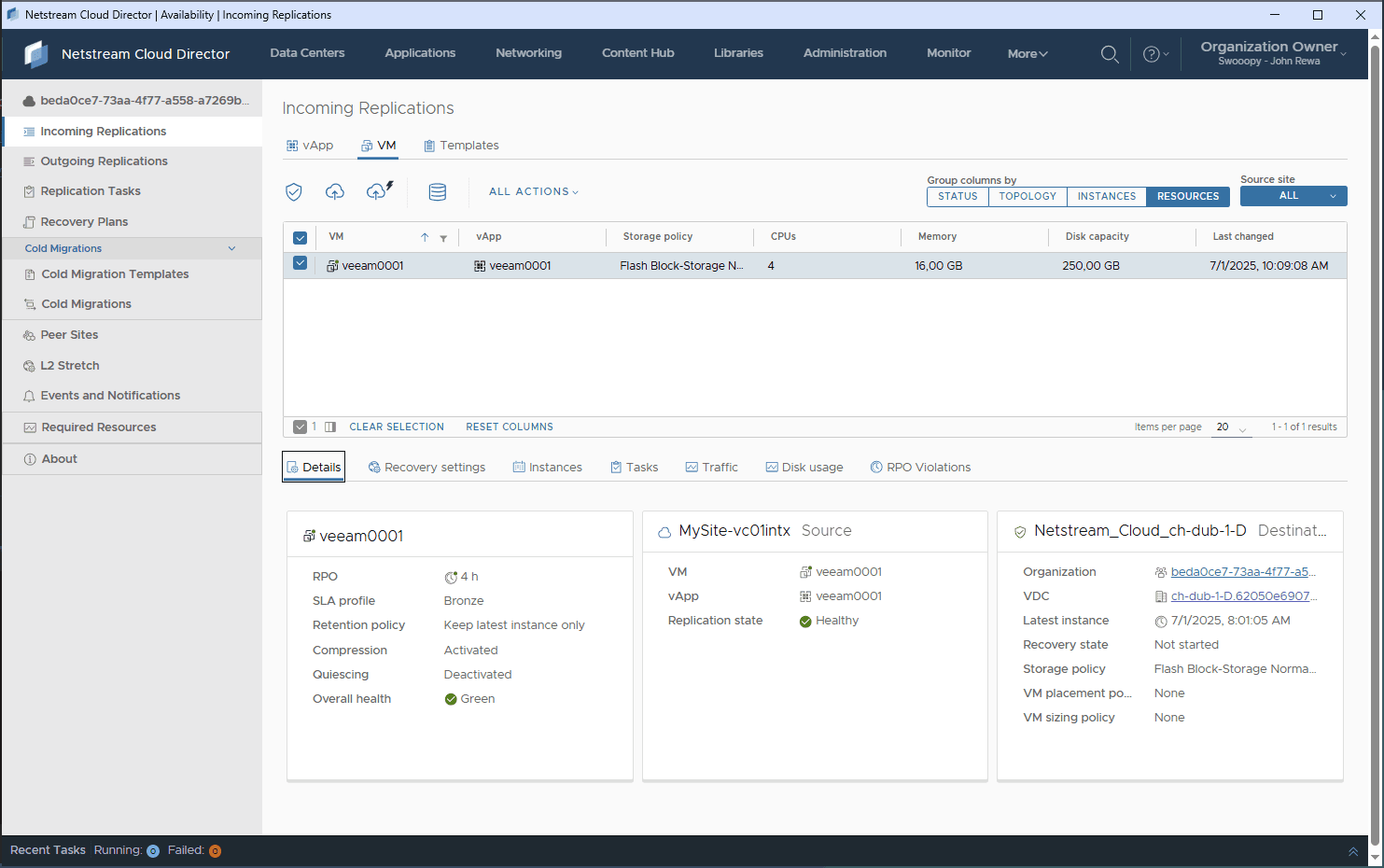
With Netstream Workload Availability Service (NWAS), however, operating redundancy becomes child’s play for any company. Simply select the virtual machines (VMs) that host your application and activate replication with NWAS to the Netstream cloud. Thanks to replication at hypervisor level, no complex application integration is required to protect your SQL servers. This makes the solution simple and scalable at the same time.
The benefits at a glance:
- Simple redundancy to a Swiss cloud.
- Takes the load off your IT team
- Consistent multi-VM application recovery with Virtual Protection Group (VPG) technology
- Failover tests without interrupting replication or shutting down production.
- No configuration changes to SQL are required, and no SQL knowledge is needed for recovery.
- SQL VSS Writer integration for scheduling application-consistent points in time
- Test SQL with application servers in isolated bubble networks