









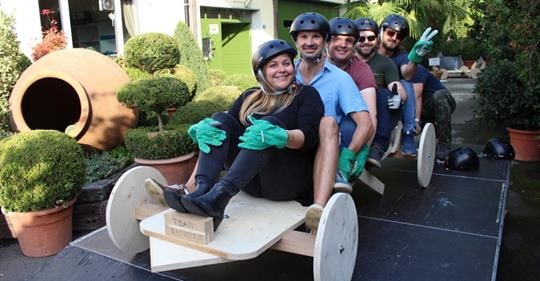
Jedes Jahr organisieren wir im Development-Team einen Team-Event. Dieses Jahr stand Autobauen auf dem Plan.
Warum wir uns für das Autobauen entschieden haben?
Diverse Methoden und Prinzipien, die wir bei Netstream täglich brauchen, finden ihre Ursprünge in der Automobilindustrie. Das Lean-Thinking kommt von Toyota und zielt auf ständige Weiterentwicklung und die Optimierung aller Produktionsprozesse ab. Kanban als Arbeitsmethode zur Effizienzsteigerung und Kaizen als Verbesserungsprozess finden sich auch bei uns im Arbeitsalltag wieder.
Das interessiert uns aber am Tag unseres Team-Events nicht im Geringsten.
Was wir für den Team-Event geplant hatten, hätte eigentlich eine Überraschung bleiben sollen. Doch Sasha und Julian haben bereits einen Tag zuvor herausgefunden, dass es ums Autobauen geht.
Am Tag des Team-Events Nach dem Mittagessen machen wir uns mit dem Zug, und dem Postauto (ja das gibt es in Zürich tatsächlich auch noch) auf den Weg nach Uitikon-Waldegg.
Die Event-Betreuer heissen uns willkommen, teilen uns in drei Teams auf und verkünden die Aufgabe. Jedes Team erhält zur Unterstützung eine Stichsäge, einen Akku-Schrauber, ein Schleifpapier, einen Zollstock, fünf stabile Holzschrauben, diverse kleine Holzschrauben, diverse Unterlagsscheiben, eine Schnur und zwei Schreiber. Die Basis bildet ein ca. 240 x 130 cm grosses Brett und zwei stabile Holzbalken.
Die Anforderungen sind tief: Das Gefährt muss fahren, lenkbar sein, eine Bremsmöglichkeit bieten und mindestens vier Teammitglieder tragen können.
Klingt easy? Vielleicht im ersten Moment. Schon mal ein Rad aus Holz und ohne Zirkel gemacht? Wir jetzt schon. Sie sind etwa so rund geworden wie damals PacMan auf einem Comodore64.
Die Challenge für unser Development-Team ist jedoch folgende: Fünf Teammitglieder mit fünf unterschiedlichen Herangehensweisen, Fähigkeiten, Ideen, Muttersprachen und unterschiedlichem Verständnis sollen in maximal zwei Stunden ein Auto bauen, das die Mindestanforderungen erfüllt und qualitativ genug hochwertig ist, um die Teststrecke zu überleben und natürlich alle heil ins Ziel zu bringen.
Genau das ist es, was unser tägliches Umfeld mit diesem Autobau verbindet: Die Komplexität zu meistern! Wir sollten also bestens vorbereitet sein.
Die Zeit wird immer knapper. Während die einen langsam mit Sägen und Bohren loslegen wollen, haben die anderen das Bedürfnis nach genauerer Konzeption. Das sind jedoch genau die Teamarbeit und der Mix, welche das Team erfolgreich und das Resultat brauchbar lassen werden.
Nach zwei Stunden stehen wir alle bereit für die Teststrecke. Bevor es aber losgeht, wird noch das Design bewertet. Auffallend ist: Alle drei Autos sind nach demselben Konzept gebaut. Dieselbe Art der Lenkung, dieselbe Bremsmöglichkeit und Bauweise.
Das erste Team macht sich ready. Schutzhelme werden montiert, das Manöver nochmals besprochen. Dom übernimmt die Lenkung, Sasha das Kommando an der Front und Dominik und Marc zusammen die Bremse. Marko sorgt für den Anschub. Mit relativ viel Schwung geht es los. Vollgas geht es die Rampe herunter und dann kracht es. Die Achse ist gebrochen. Aber schnell geht zu Fuss weiter und jede Schraube muss mit, denn jede Sekunde zählt. Am Schluss sind alle sicher am Ziel – nur das Auto nicht.
Das zweite Team macht sich, mindestens genau so nervös, ebenfalls ready. Guenda als Bug, Steffen an der Lenkung, Simon als Kraftpacket alleinig für die Bremse verantwortlich und Julian sowie Meisti als Passagiere. Sie haben sich entschieden, die Schnur als Hippie-Haarband anstatt als Lenkung zu verwenden. Ob dies clever war? Guenda steht die Angst ins Gesicht geschrieben. Ein letzter Schrei und los geht es. Am Ende der Rampe kracht es auch hier. Die Achse ist gebrochen.
Auch hier nehmen alle Teammitglieder schnell alles in die Hand und gehen, alle wohlauf, zu Fuss ins Ziel.
Das dritte Team mit Cinzia im Kommando, Simon am Steuer, Bartosz und Patrick an der Bremse und Miguel beim Anschub macht sich nun bereit. Weil das Vertrauen in die eigene Konstruktion so gross ist, verzichtet das Team auf Helme. Und tatsächlich: Die Achse hält. Nach zwei Metern kracht es zwar auch, aber nur in die Mauer. Schnell Retourgang (manuell) und weiter. Dieses Mal auf dem Gefährt, dafür aber wirklich langsam.
Nun haben wir aber genug gebastelt und freuen uns auf die Preisverleihung. Team drei gewinnt den Designer-Preis und Team zwei den Preis für die beste Testfahrt. Dies feiern wir mit einem Team-Hurra, Bier und einer guten Flasche Prosecco.
Da uns irgendwann die Getränke ausgehen und sich der Hunger bemerkbar macht, machen wir uns wieder auf den Weg in die Stadt. In Birmensdorf nehmen wir den Zug nach Zürich, wo uns Guenda zu sich nach Hause einlädt. Punkto Agilität können wir von Guenda’s Partner noch einiges lernen. Nach einem kurzen Anruf hat er sich nämlich kurzerhand auf den Weg gemacht, um den Kühlschrank mit kalten Getränken zu füllen! Vielen Dank! Es war ein toller Team-Event.